
What Is Nitrogen Plasma Energy and How Does It Work?
The term nitrogen plasma energy can sound highly technical, but the science behind it is easier to understand than you might think. To explain it simply, we first need to look at what nitrogen is, what plasma means and how a gas can temporarily become a form of energy capable of being delivered to the skin.
What is nitrogen?
Nitrogen is a naturally occurring gas that makes up most of the air around us.
Like all matter, nitrogen is made from tiny particles called atoms. In its normal gas form, nitrogen is stable and electrically neutral. This means the particles are not carrying an overall electrical charge. Inside a nitrogen plasma device, medical-grade nitrogen gas is introduced into the treatment handpiece. The gas is then exposed to a controlled source of radiofrequency energy.
This additional energy changes the behaviour of the nitrogen particles.
How does nitrogen gas become plasma?
When enough energy is applied to a gas, some of the electrons can separate from their atoms.
Electrons carry a negative electrical charge. Once they separate, the gas becomes a mixture of:
free electrons;
positively charged particles known as ions; and
neutral nitrogen particles.
This process is called ionisation. Once enough of the nitrogen particles become ionised, the gas enters a different physical state known as plasma.
Plasma is often described as the fourth state of matter:
Solid → Liquid → Gas → Plasma
Although we may not hear about plasma as often as solids, liquids or gases, it also occurs naturally. Lightning is one familiar example of plasma.

Is plasma simply a very hot gas?
Not exactly. A normal gas is made primarily from electrically neutral particles. Plasma contains a mixture of charged and neutral particles, which means it behaves differently.
Because the particles carry electrical charges, plasma can conduct and transfer energy efficiently. This makes it useful in a range of medical, scientific and industrial technologies.
The nitrogen itself has not turned into a completely different substance. It is still nitrogen, but it has temporarily entered a highly energised and electrically charged state.
A simple way to remember the process is:
Nitrogen gas + radiofrequency energy = nitrogen plasma
What does “plasma energy” mean?
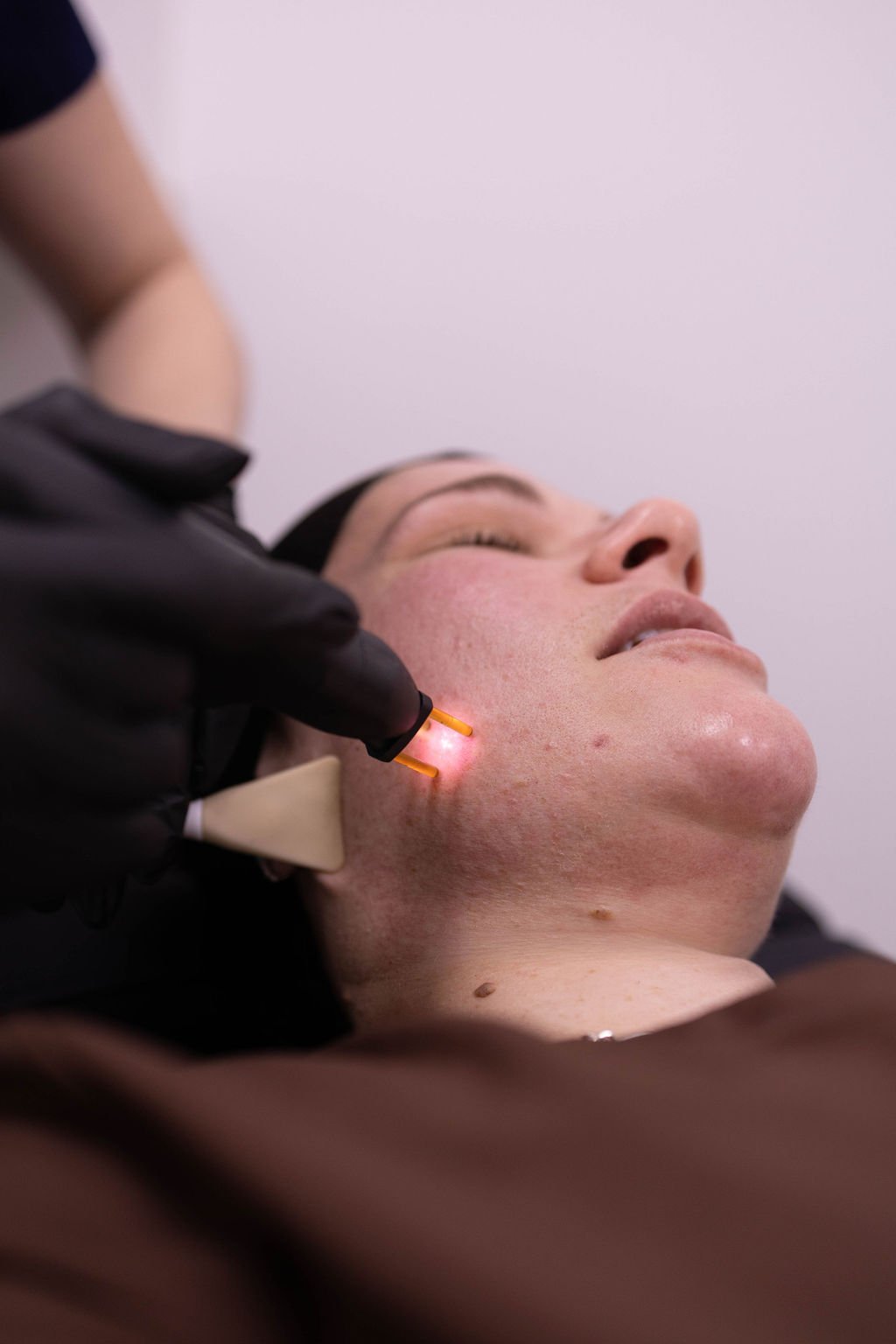
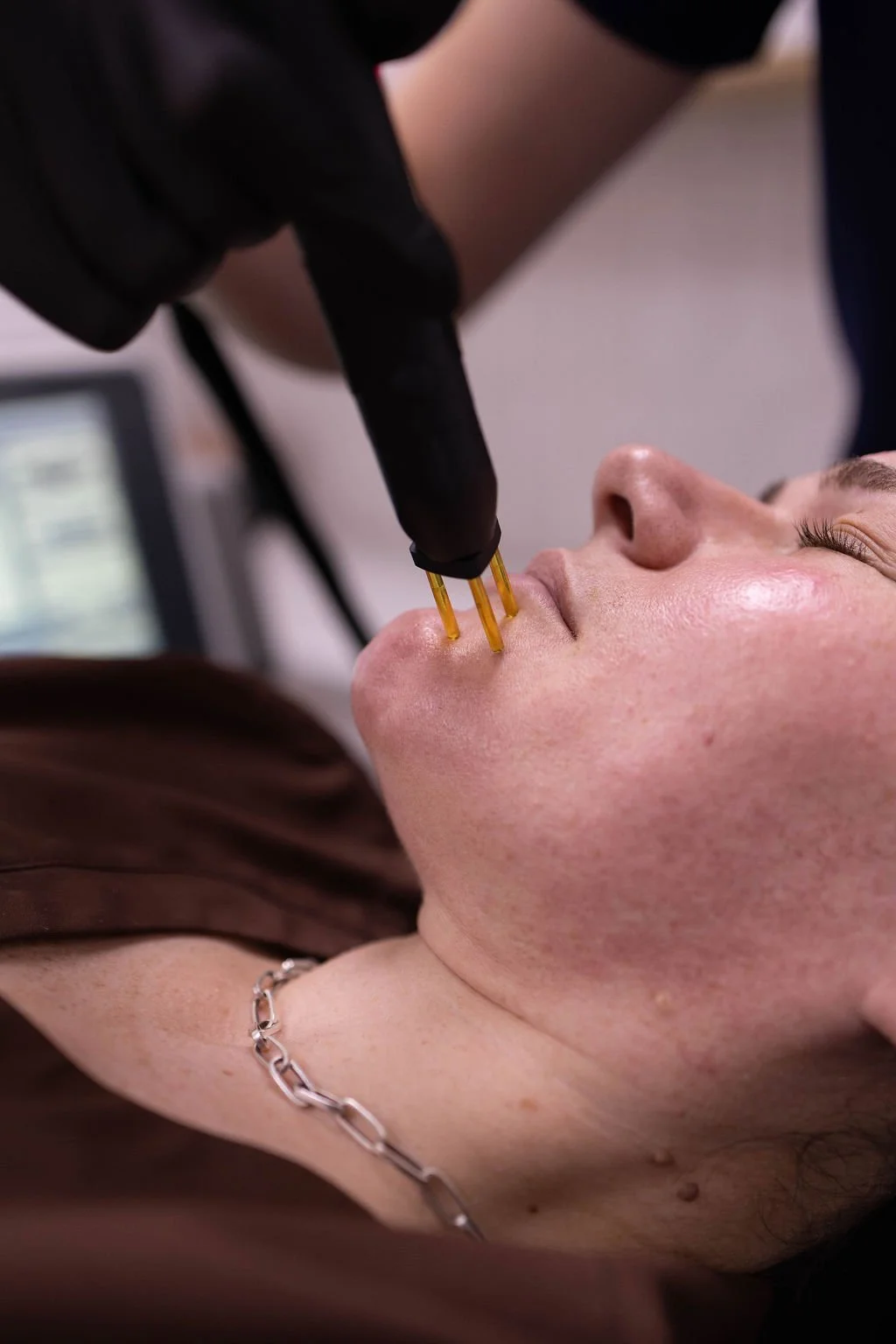
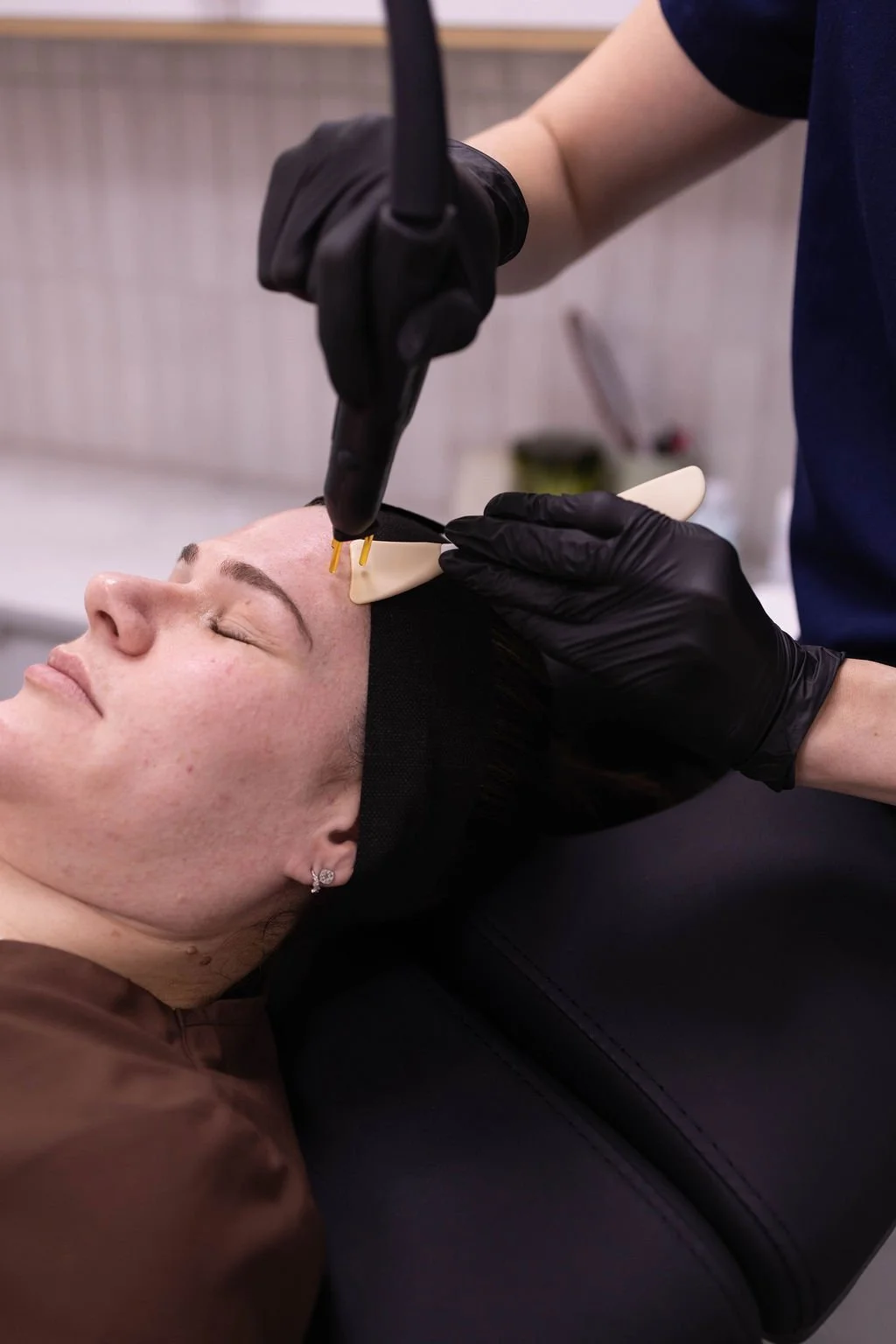
Plasma energy refers to the energy held and transported by the energised, ionised nitrogen particles. Inside the device, radiofrequency energy is used to create the plasma. The plasma is then released from the handpiece as a short, controlled pulse.
When that pulse reaches the treatment area, the energy carried by the plasma is transferred into the skin, primarily as controlled thermal energy.
In simple terms, the plasma acts as the delivery system. It carries the energy from the device to the skin in a precise and controlled way.
Does the plasma stay inside the skin?
No. The plasma exists only briefly.
After the energy is transferred, the charged particles lose their additional energy and begin returning towards their normal gas state. Plasma is not implanted into the skin and it does not remain there following treatment.
It is simply the temporary, energised form used to transport energy from the device to the treatment area.
Why use nitrogen?
Nitrogen is used because it allows the device to generate a controlled plasma pulse without relying on light being absorbed by a particular colour or pigment in the skin.
This is different from many laser technologies, which use specific wavelengths of light and may interact with targets such as melanin, haemoglobin or water.
Nitrogen plasma instead delivers controlled energy through an ionised gas.
The simplest explanation
Nitrogen plasma energy can be understood in five steps:
Nitrogen begins as a normal gas.
Radiofrequency energy is applied to the gas.
Some electrons separate from the nitrogen atoms.
The gas becomes ionised plasma.
The plasma carries and releases controlled energy when it reaches the skin.
The plasma itself is temporary. It is the vehicle used to transfer energy, rather than a substance that remains within the body.
Why understanding the technology matters
The phrase “plasma treatment” can sometimes create confusion because plasma is also associated with blood.
Nitrogen plasma has nothing to do with blood plasma.
In this context, plasma is a physical state of matter created when energy is added to nitrogen gas. Understanding this distinction helps make the technology feel less mysterious and allows clients to better understand what is actually being delivered during treatment.
At Future Face Clinics, we believe clients should understand not only what a treatment is designed to achieve, but also the science behind how the technology works.
Nitrogen plasma may sound complex, but the basic principle is simple: ordinary nitrogen gas is temporarily energised and ionised so it can carry a precise pulse of energy to the skin.
