
Signs of Sun-Damaged Skin
What sun damage can look like, and why it doesn’t always show up as a sunburn
When most people think of sun damage, they think of sunburn. Red, hot, peeling skin after a day in the sun. But in clinic, sun damage often looks very different.
It can show up as pigmentation that won’t fade, skin that suddenly feels rougher or duller, fine lines that seem to appear earlier than expected, or a complexion that no longer looks as clear and even as it once did. And because this kind of damage builds gradually over time, many people don’t realise what they’re seeing is actually the result of years of UV exposure.
At Future Face Clinics, we talk about sun damage a lot because it’s one of the biggest contributors to visible skin ageing, pigmentation and changes in overall skin quality. The good news is that once you understand what it can look like, it becomes much easier to support your skin with the right treatment plan.
What is sun-damaged skin?
Sun-damaged skin is skin that has been affected by repeated exposure to ultraviolet (UV) radiation over time. This damage doesn’t always happen after one big day in the sun. More often, it’s the result of small amounts of exposure adding up over years, driving changes in pigment, collagen, texture and the way the skin behaves overall.
That’s why you can be diligent with your skincare now, but still notice signs of sun damage showing up from exposure that happened years ago.
Common signs of sun-damaged skin
1. Pigmentation and uneven skin tone
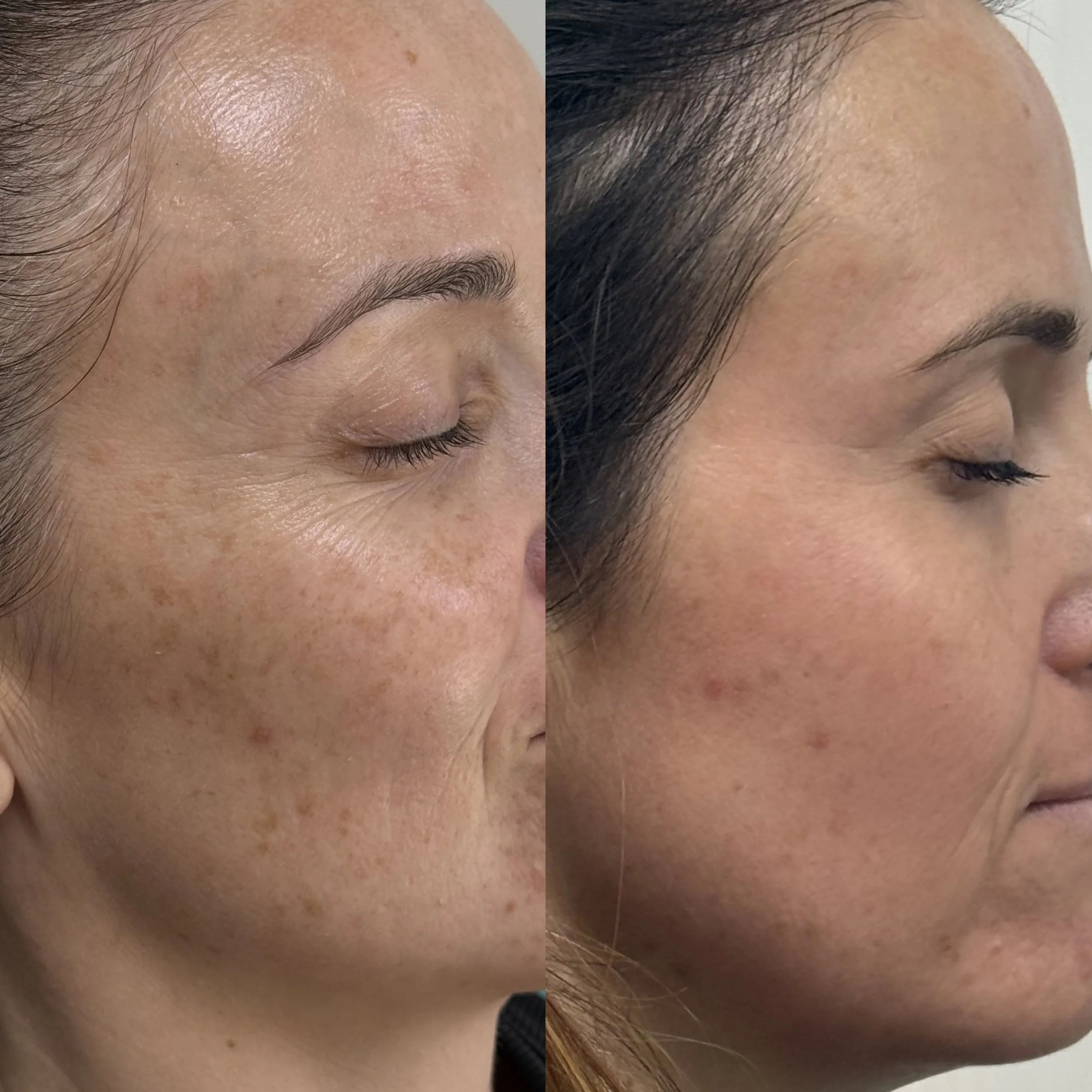
One of the most common signs of sun damage is pigmentation. This might look like freckles that have darkened over time, sun spots, patches of uneven tone, or pigment that seems to linger no matter what you do.
UV exposure stimulates melanin production, and over time that can lead to visible discolouration that becomes harder to shift without the right treatment approach.
2. Skin that looks dull or less clear
Sun-damaged skin often loses some of its natural brightness. It can start to look duller, more uneven or less fresh, even if you’re otherwise looking after it well.
This is often a combination of pigment changes, texture changes and a general decline in skin function caused by ongoing UV stress.
3. Rough texture or dry, leathery skin
If your skin feels rougher than it used to, or you’ve noticed a texture that feels more dry, thickened or leathery, sun exposure may be part of the picture.
Chronic UV damage can affect the way the skin renews itself, leading to a surface that doesn’t feel as smooth, hydrated or refined as healthy skin should.
4. Fine lines and premature ageing
Sun exposure is one of the biggest contributors to premature skin ageing. UV radiation breaks down collagen and elastin, which are responsible for keeping skin firm, supported and resilient.
Over time, this can show up as:
fine lines
crepey skin
reduced firmness
deeper signs of ageing appearing earlier than expected
This is often referred to as photoageing, ageing caused by sun exposure rather than time alone.
5. Redness and visible capillaries
For some skins, sun damage doesn’t just show up as brown pigment, it can also show up as redness, sensitivity and visible capillaries.
Repeated UV exposure can contribute to inflammation and vascular changes in the skin, particularly in those already prone to redness or reactive skin.
6. Skin that no longer bounces back the way it used to
Sometimes the signs of sun damage are less obvious, but you can still feel that the skin has changed. It may not look as plump, even or resilient as it once did. It may feel like your skin is slower to recover, more easily irritated, or just not behaving the way it used to.
That shift in overall skin quality can absolutely be part of a sun damage picture.
Why sun damage can be hard to spot
One of the reasons sun damage is so common is because it doesn’t always look dramatic. It often develops slowly, quietly, and in ways people don’t immediately associate with UV exposure.
A little more pigment here. A bit more roughness there. Fine lines that seem to arrive sooner than expected. Skin that no longer looks as bright or even as it used to.
By the time people notice the change, it’s often not about one summer, it’s about cumulative exposure over many years.
Can sun-damaged skin be treated?
The answer is often yes, but the right approach depends on what kind of sun damage is present.
At Future Face Clinics, treatment might involve a combination of:
pigment-focused skin treatments.
skin needling to support overall skin quality.
PRX Plus to help improve brightness and rejuvenation.
targeted home care to support pigment control, barrier health and skin renewal.
daily SPF to prevent further stimulation and protect the work we’re doing.
The goal isn’t just to improve what you can already see, it’s also to support the skin in a way that helps prevent further damage and maintain results long term.
The most important step? Prevention
If there’s one thing we can’t say enough, it’s this: SPF matters.
You can invest in all the right treatments and all the right skincare, but if the skin isn’t being protected from UV exposure, it becomes much harder to improve concerns like pigmentation, uneven tone and premature ageing.
Prevention doesn’t have to be complicated. It just needs to be consistent.
The bottom line
Sun-damaged skin doesn’t always announce itself with a sunburn. Sometimes it shows up as pigmentation, roughness, dullness, fine lines, redness or a general loss of skin quality that creeps in over time.
The good news is that once you recognise the signs, you can start building a plan to support your skin properly, with the right treatments, the right home care, and the right protection moving forward.
If you’re noticing changes in your skin and wondering whether sun damage could be part of the picture, book a consultation at Future Face Clinics. We can assess your skin, talk through what we’re seeing, and create a treatment plan tailored to your concerns.
